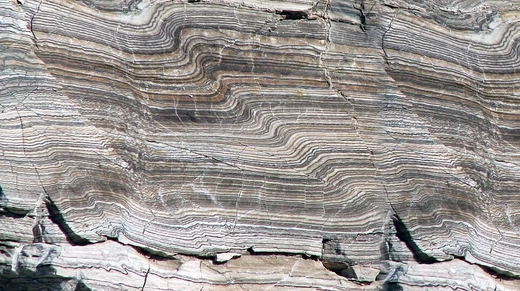
Vaalbara
Hypothetical Archean supercontinent linking South Africa and Australia.
Vaalbara is a proposed early supercontinent from the Archean eon, made up of what are now the Kaapvaal Craton in eastern South Africa and the Pilbara Craton in northwestern Western Australia. The name, coined by E. S. Cheney, combines the last four letters of each craton's name. The crust of both cratons dates between 3.6 and 2.7 billion years old, placing Vaalbara among Earth's earliest known supercontinents.
Whether Vaalbara actually existed has been debated. In 1976, Alan Button first suggested a link between South Africa and Western Australia during the Archean to Paleoproterozoic (2.8–2.1 Ga), based on similarities between the Transvaal and Hamersley Basins. Button placed Madagascar between Africa and Australia, implying a long stable tectonic history for Gondwana. Later reconstructions by Rogers proposed an older continent called Ur, but placed Kaapvaal and Pilbara far apart, which contradicted later orogenic events and the Vaalbara idea. Cheney in 1996 pointed to a three-fold stratigraphic match and named Vaalbara; this was supported by paleomagnetic data from Zegers, de Wit, and White in 1998. However, reconstructions of the cratons' positions at 2.78–2.77 Ga are ambiguous: Wingate's 1998 model showed no overlap, while later studies (e.g., Strik et al., 2003) found one. Some scientists argue the similarities are due to global processes, noting thick volcanic deposits on other cratons like Amazonia, São Francisco, and Karnataka.
Another proposed supercraton, Zimgarn (Zimbabwe and Yilgarn cratons at 2.41 Ga), is distinct from Vaalbara. Zimgarn likely broke apart around 2.1–2.0 Ga, later reassembling into the Kalahari and West Australian cratons (Yilgarn and Pilbara) by 1.95–1.8 Ga. The Grunehogna Craton in East Antarctica was part of the Kalahari Craton for at least a billion years, colliding with East Antarctica during the Mesoproterozoic assembly of Rodinia. Later, the Pan-African orogeny and Gondwana's assembly created large shear zones between Grunehogna and Kalahari, which finally separated them during the Jurassic breakup of Gondwana. Detrital zircons from the Annandags Peaks in Antarctica, the only exposed Grunehogna rocks, date to 3.9–3.0 Ga, suggesting intracrustal recycling helped form the first cratons.
The Kaapvaal craton experienced major events like the Bushveld Complex intrusion (2.045 Ga) and the Vredefort impact (2.025 Ga), with no
- type
- Hypothetical supercontinent
- proposed_by
- E. S. Cheney (1996)
- constituent_cratons
- Kaapvaal Craton and Pilbara Craton
- age_range
- 3.6–2.7 Ga
- lifespan
- 1–0.4 Ga
- first_proposed_link
- Alan Button (1976)
Lore & Background
The concept of Vaalbara emerged from observed similarities between the Kaapvaal Craton in South Africa and the Pilbara Craton in Western Australia. In 1976, Alan Button first proposed an Archaean–Palaeoproterozoic link between the two regions, noting similarities between the Transvaal Basin and the Hamersley Basin. However, his reconstruction placed Madagascar between Africa and Australia. Later, in 1996, E. S. Cheney derived the name Vaalbara from the last four letters of each craton and proposed a three-fold stratigraphic similarity, supported by palaeomagnetic data from Zegers, de Wit & White 1998.
Debate continues over Vaalbara's existence. Some reconstructions of palaeolatitudes at 2.78–2.77 Ga fail to show overlap, while others, such as Strik et al. 2003, do. Critics explain the similarities as products of global processes, pointing to thick volcanic deposits on other cratons. The Kaapvaal craton experienced the Bushveld Complex intrusion (2.045 Ga) and Vredefort impact (2.025 Ga), with no traces in Pilbara, indicating separation before 2.05 Ga. Geochronological and palaeomagnetic evidence suggests a 30° latitudinal separation by 2.78–2.77 Ga.
Vaalbara is distinct from Zimgarn, another proposed supercraton composed of the Zimbabwe and Yilgarn cratons at 2.41 Ga. The Grunehogna Craton in East Antarctica formed part of the Kalahari Craton for at least a billion years, later separated by shear zones during Gondwana breakup. Detrital zircons from Antarctica's Annandags Peaks date to 3.9–3.0 Ga, suggesting intracrustal recycling in early craton formation.
Reader's Guide
Vaalbara represents a key concept in understanding Earth's earliest continental configurations. Its proposed existence highlights the methods used to reconstruct ancient supercontinents: stratigraphic correlation, palaeomagnetic data, and impact spherule layers. The similar greenstone belts, impact spherules from 3.5 billion years ago, and microfossil evidence in both cratons provide compelling but disputed evidence. The debate over Vaalbara illustrates the challenges of Precambrian tectonics, where global processes versus specific continental links remain unresolved. Its lifespan of 1–0.4 Ga is comparable to later supercontinents like Gondwana and Rodinia. The hypothesis also connects to the origin of life, as both cratons contain well-preserved Archaean microfossils and evidence of early photosynthesis. Whether Vaalbara existed or not, the study of these cratons continues to inform models of early Earth dynamics, crustal evolution, and the timing of continental assembly and breakup.
Did You Know?
- The name Vaalbara is derived from the last four letters of Kaapvaal and Pilbara.
- The Kaapvaal and Pilbara cratons contain the oldest-known terrestrial impact products, glassy spherules dated to 3.5 billion years ago.
- The Kaapvaal craton experienced the Bushveld Complex intrusion (2.045 Ga) and Vredefort impact (2.025 Ga), with no traces found in the Pilbara craton.
- Detrital zircons from Antarctica's Annandags Peaks, part of the Grunehogna Craton, have been dated to 3.9–3.0 Ga.
More in Structural Geology And Tectonics 1-24
Spotted an error? Know more?
This is a living reference — every entry is fact-audited, and reader corrections feed straight into our audit queue. Suggest an edit · See this site's audit record