Cratonic sequence
Large-scale rock sequences recording sea-level cycles on cratons.
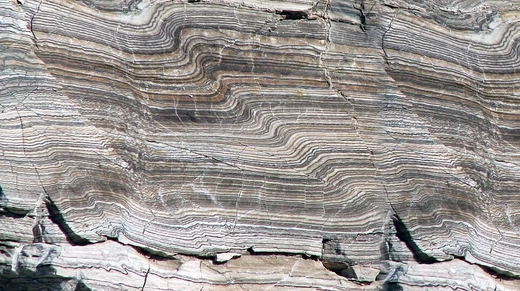
A cratonic sequence—also called a megasequence, Sloss sequence, or supersequence—is a massive set of sedimentary rock layers that records a full cycle of the sea advancing over and then retreating from a continental craton. These sequences are physical evidence of relative sea level rising (transgression) and falling (regression), which deposited different sediment types across the craton that later hardened into rock. The Grand Canyon offers a clear visual example, with its distinct rock layers reflecting shifts in ancient environments over time.
Geologist Laurence L. Sloss first proposed cratonic sequences in 1963. Each sequence corresponds to a period when inland seas spread sediment across the craton. The top and bottom of each sequence are marked by continent-wide unconformities—gaps in the rock record—that formed when the seas withdrew and erosion removed material instead of depositing it.
**Cause and chronology**
These sequences may partly reflect eustatic (global) sea-level changes, but when given proper names, they usually refer to relative sea-level shifts on the North American continent. The most likely driver is change in mid-ocean ridge volume, tied to seafloor spreading rates. When spreading is fast, ridges become longer and hotter, lifting the lithosphere and pushing seawater onto continents. When spreading slows, ridges sink and seas drain off the cratons. Other mechanisms—such as dynamic topography from mantle mass anomalies or intraplate stress from contractional and extensional tectonics—may also cause significant uplift and subsidence across the craton.
Since the start of the Cambrian Period, six cratonic sequences have been identified. For North America, from oldest to youngest, these are the Sauk, Tippecanoe, Kaskaskia, Absaroka, Zuñi, and Tejas sequences. Efforts to find matching sequences on other continents have had only limited success, suggesting that global sea-level change alone cannot explain them.
- first_proposed_by
- Laurence L. Sloss
- year_proposed
- 1963
- number_since_Cambrian
- 6
- North_American_sequences
- Sauk, Tippecanoe, Kaskaskia, Absaroka, Zuñi, Tejas
- primary_cause
- Change in mid-ocean ridge volume related to seafloor spreading rates
- other_possible_causes
- Dynamic topography, intraplate stress
Lore & Background
Cratonic sequences were first proposed by Laurence L. Sloss in 1963. Each sequence represents a time when inland seas deposited sediments across the craton. The top and bottom edges of a sequence are each bounded by craton-wide unconformities, which indicate time gaps in the rock record when seas receded and sediment was eroded rather than deposited. The most likely causes of these cycles are changes in mid-ocean ridge volume related to seafloor spreading rates: when ridges spread rapidly, they become longer and more elevated, displacing seawater onto continents; when spreading rates decline, ridges subside and seas drain from cratons.
Reader's Guide
Cratonic sequences are significant because they provide a framework for understanding large-scale patterns of sea-level change and sedimentation on continents over hundreds of millions of years. They were first identified on the North American craton, where six sequences have been recognized since the beginning of the Cambrian Period: Sauk, Tippecanoe, Kaskaskia, Absaroka, Zuñi, and Tejas. Attempts to identify equivalent sequences on other continents have met with only limited success, suggesting that eustatic (global) sea-level change is unlikely to be the sole responsible mechanism. Other possible contributing factors include dynamic topography related to mantle mass anomalies and intraplate stress from episodes of contractional and extensional tectonics. The concept remains a key tool in sequence stratigraphy and the study of sedimentary basins.
Did You Know?
- Cratonic sequences are also called megasequences, Sloss sequences, or supersequences.
- The Grand Canyon is a visual example of cratonic sequences showing changes between layers deposited over time.
- There have been six cratonic sequences since the beginning of the Cambrian Period.
- Attempts to identify equivalent cratonic sequences on other continents have met with only limited success.
More in Structural Geology And Tectonics 1-24
Spotted an error? Know more?
This is a living reference — every entry is fact-audited, and reader corrections feed straight into our audit queue. Suggest an edit · See this site's audit record