Craton
Old, stable continental crust forming Earth's ancient cores.
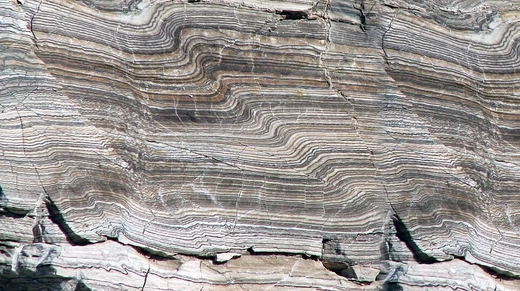
A craton is an old and stable part of continental lithosphere, comprising the Earth's crust and lithospheric mantle. Having often survived cycles of merging and rifting of continents, cratons are generally found in the interiors of tectonic plates and contain the oldest continental crust rocks on Earth, formed during the Archaean and Proterozoic eons.
- field
- Geology
- known_for
- Stable ancient cores of continents, composed of crystalline basement rock and sedimentary cover
- first_proposed_by
- Leopold Kober in 1921 as Kratogen
- term_shortened_by
- Hans Stille to Kraton
- composition
- Cratonic basement (metamorphosed crystalline and metamorphic rocks) and platform (younger sedimentary cover)
- examples
- Dharwar Craton, North China Craton, East European Craton, Amazonian Craton, Kaapvaal Craton, North American Craton, Gawler Craton, Wyoming Craton, Superior Craton
Lore & Background
Cratons are composed of two layers: the cratonic basement of metamorphosed crystalline and metamorphic rocks, and the platform, a younger, weakly deformed sedimentary cover. Continental shields are exposed cratonic basement rocks, while platforms are the buried portion. The term craton was first proposed by Austrian geologist Leopold Kober in 1921 as Kratogen, later shortened by Hans Stille to Kraton.
Cratons have thick lithospheric roots extending several hundred kilometres into Earth's mantle. Mantle tomography shows these roots are underlain by anomalously cold mantle, more than twice the typical thickness of mature oceanic or non-cratonic continental lithosphere. Craton lithosphere is distinctly different from oceanic lithosphere, having neutral or positive buoyancy and low intrinsic density, which prevents sinking into the deep mantle.
The process of craton formation is called cratonization, about which there is little consensus. The first cratonic landmasses likely formed during the Archean eon. Rock of the Archean age makes up only 7% of the world's current cratons. Cratonization likely was completed during the Proterozoic. Several models exist for the origin of craton roots, including melt extraction, repeated continental collisions, molten plumes, subducting ocean slabs, and an impact origin model.
Reader's Guide
Cratons are fundamental to understanding Earth's geological history because they preserve the oldest continental crust, dating back to the Archaean and Proterozoic eons. Their stability over billions of years provides a record of early Earth processes, including the formation of the first continents. The study of cratons has revealed that they have thick, cold lithospheric roots that extend deep into the mantle, and their low-density composition prevents them from sinking. The debate over cratonization—how cratons formed—remains active, with competing models involving melt extraction, continental collisions, mantle plumes, subducting slabs, and impacts. This uncertainty highlights the complexity of early Earth dynamics. Cratons also serve as hosts for valuable mineral deposits, such as diamonds, which originate in their roots. Their presence as stable cores within tectonic plates influences modern plate tectonics and continental evolution. Understanding cratons helps geologists reconstruct past supercontinents and the processes that shaped the Earth's surface over billions of years.
Did You Know?
- The term craton was first proposed by Austrian geologist Leopold Kober in 1921 as Kratogen.
- Cratons contain the oldest continental crust rocks on Earth, formed in the Archaean and Proterozoic eons.
- Craton lithosphere is much older than oceanic lithosphere—up to 4 billion years versus 180 million years.
- Diamonds, which originate in the roots of cratons, are almost always over 2 billion years and often over 3 billion years in age.
More in Structural Geology And Tectonics 1-24
Spotted an error? Know more?
This is a living reference — every entry is fact-audited, and reader corrections feed straight into our audit queue. Suggest an edit · See this site's audit record