Basement (geology)
Crystalline foundation of continents beneath sedimentary cover.
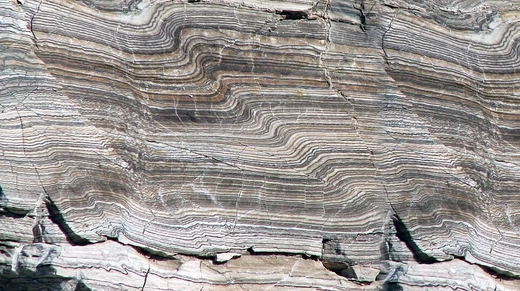
Basement (geology) refers to the crystalline rocks, typically metamorphic or igneous, that lie above the mantle and beneath all other rocks and sediments. These rocks form the thick, ancient foundation of continental crust, often composed of granite and schist, and are sometimes exposed at the surface but more often buried under miles of sedimentary cover. Basement rocks are significant because they record the tectonic history of continents, including deformation, metamorphism, and magmatism, and they contrast with the younger sedimentary rocks deposited above them.
- field
- Geology
- composition
- Crystalline metamorphic and igneous rocks (e.g., granite, schist)
- location
- Beneath sedimentary cover; exposed in places like the Grand Canyon
- thickness
- 32–48 km (20–30 mi) or more
- age
- Typically 1–3 billion years old; continental crust older than oceanic crust
- key_feature
- Forms the foundation of continents; often highly metamorphosed and complex
Lore & Background
Basement rock consists of continental crustal rock modified through multiple tectonic events including deformation, metamorphism, deposition, partial melting, and magmatism. It is the thick foundation of ancient metamorphic and igneous rock that forms the crust of continents, often in the form of granite. The basement is contrasted with overlying sedimentary rocks such as sandstone and limestone, which may form a relatively thin veneer but can exceed 5 km (3 mi) in thickness. The basement rock of the crust can be 32–48 km (20–30 mi) thick or more and can be visible at the surface, as at the bottom of the Grand Canyon, where 1.7- to 2-billion-year-old granite (Zoroaster Granite) and schist (Vishnu Schist) are exposed.
Reader's Guide
Basement rocks are fundamental to understanding continental formation and tectonic history. They are often highly metamorphosed and complex, containing volcanic, intrusive igneous, and metamorphic rocks, as well as ophiolites—fragments of oceanic crust wedged between plates during terrane accretion. Continents can grow over time as new terranes are accreted to their edges, making basement rock younger toward the continental margin, though exotic terranes (pieces of other continents) are exceptions. The U.S. East Coast exemplifies basement geology: the crystalline basement formed largely during the late Paleozoic Alleghanian orogeny as Africa collided with North America to assemble Pangaea. Parts of Florida's basement are Gondwanan in origin, and after the breakup of Pangaea, rifting produced basins filled with sediments and basalt flows. The boundary between the sedimentary coastal plain and crystalline rocks is the Fall Line, where rivers drop from hard Piedmont basement onto softer sediments. Basement rocks persist beneath the coastal plain and offshore, as confirmed by drill cores and geophysical surveys. The distinction between basement and cover is also important in Alpine geology, where Permian evaporites formed a weak zone allowing harder limestone cover to move over the basement.
Did You Know?
- Basement rocks are sometimes exposed at the surface, such as the 1.7- to 2-billion-year-old granite and schist at the bottom of the Grand Canyon.
- The oceanic crust averages 64 million years in age, while continental basement rocks are typically 1 to 3 billion years old.
- Parts of Florida's basement rocks are Gondwanan (African) in origin, welded to North America during the assembly of Pangaea.
- The Fall Line marks the boundary where rivers drop from hard Piedmont basement onto softer Coastal Plain sediments.
More in Structural Geology And Tectonics 1-24
Spotted an error? Know more?
This is a living reference — every entry is fact-audited, and reader corrections feed straight into our audit queue. Suggest an edit · See this site's audit record