Frequently Asked Questions
The most-asked questions about structural geology and tectonics.
What exactly is structural geology?
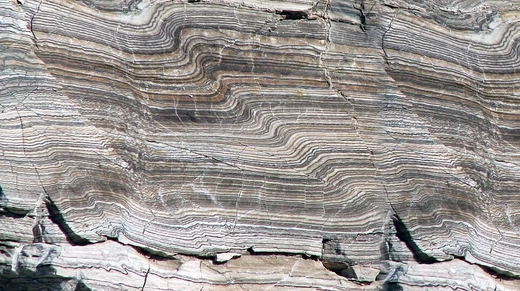
Structural geology is the branch of geoscience that studies how rocks deform and arrange themselves in response to tectonic forces, focusing on features like folds, faults, and foliations. It essentially reads the 'body language' of the Earth's crust to reconstruct what happened and when.
How is structural geology different from plate tectonics?
Structural geology zooms in on the deformation patterns within individual rocks and rock masses, while plate tectonics is the broader framework explaining how large lithospheric plates move and interact. Think of it as the difference between studying a single fracture in a bone versus understanding the whole skeletal system.
Who are the foundational figures every fan should know?
James Hutton laid early groundwork with uniformitarianism, Alfred Wegener proposed continental drift in 1912, and Harry Hess's seafloor-spreading model in 1962 helped cement modern plate tectonics. The trio of J. Tuzo Wilson, W. Jason Morgan, and Daniel McKenzie also shaped the theory's mathematical backbone in the late 1960s.
Where should a complete beginner start?
A solid entry point is learning the three main plate-boundary types—divergent, convergent, and transform—before diving into specific deformation mechanisms. From there, picking up a field guide to rock structures or a short course on fold-and-thrust mechanics will build real intuition.
What are the most iconic structures people love to photograph?
The anticlines of the Burren in Ireland, the dramatic thrust sheets of the Swiss Alps, and the colorful folded strata of the Atlas Mountains in Morocco are perennial favorites. Fans also gravitate toward the giant folds of the Variscan belt and the sharp fault scarps of the San Andreas system.
What is a key turning-point moment in the field's history?
The 1968 publication of Wilson, Morgan, and McKenzie's papers is often cited as the moment plate tectonics went from a fringe idea to the unifying theory of geoscience. Equally beloved by fans is the 1953 mapping of the Mid-Atlantic Ridge's central rift valley by the research vessel Atlantis, which gave Wegener's old idea hard physical evidence.
What tools do structural geologists actually use in the field?
Beyond a compass-clinometer and a good hammer, the toolkit includes stereonets for plotting orientations, outcrop maps, and increasingly LiDAR and satellite InSAR for mapping structures at scale. Thin-section microscopy and electron backscatter diffraction let them read the microscopic strain history locked in individual grains.
What's the difference between a fold and a fault?
A fold is a continuous, curved bending of rock layers, whereas a fault is a discrete break along which blocks have slipped past one another. In practice they often appear together—thrust faults, for example, frequently create the thick, stacked folds seen in mountain belts.
Why does structural geology matter outside the classroom?
It underpins everything from locating hydrocarbon traps and assessing earthquake and landslide hazards to designing stable tunnels and predicting where mineral deposits concentrate. Understanding how crust deforms is also essential for interpreting the deep-time climate record preserved in deformed sedimentary sequences.
What's a fun 'easter egg' fact fans love to share?
The San Andreas Fault was only formally mapped as a continuous structure during Andrew Lawson's 1908 earthquake investigation, even though people had walked along its trace for centuries. Another crowd-pleaser: the word 'tectonics' derives from the Greek 'tekton,' meaning builder or carpenter—so the field is literally about the Earth's construction work.